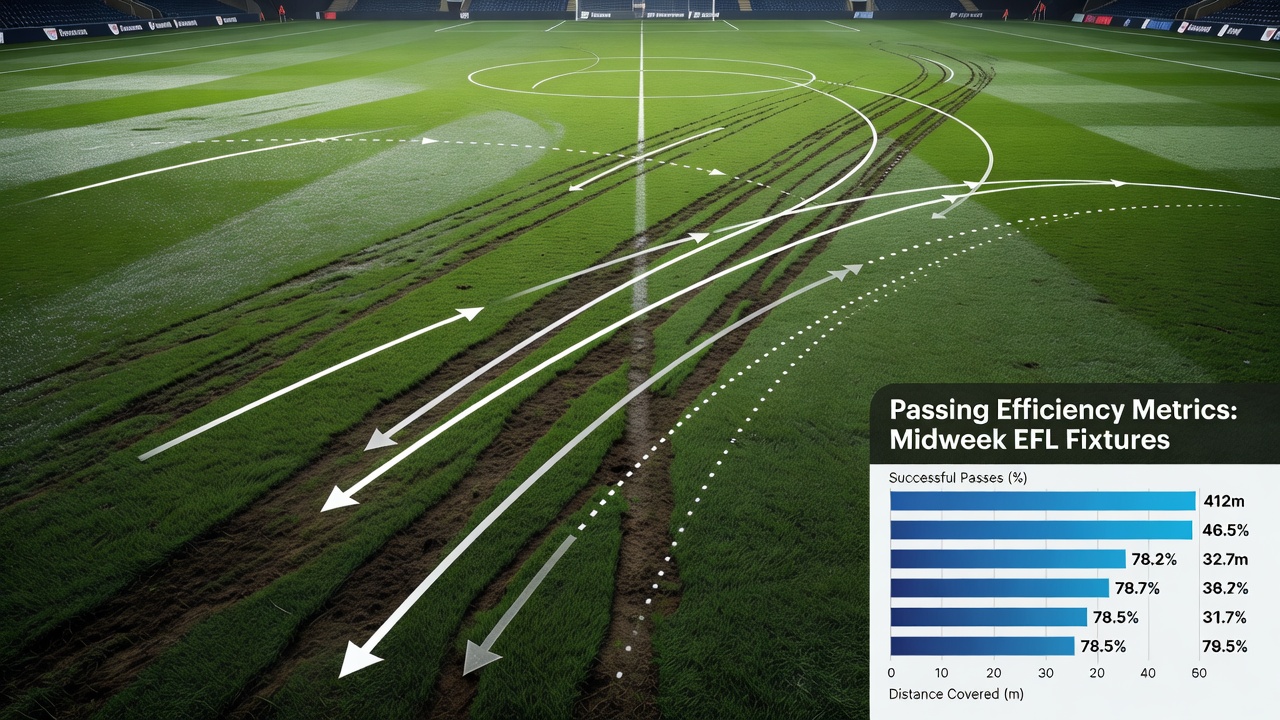
Pitch Wear Patterns and Passing Efficiency in Midweek EFL Championship Matches
Stadium surfaces in the EFL Championship undergo repeated stress from frequent fixtures, and midweek games accelerate the development of distinct wear zones that directly alter how the ball travels across the turf. Researchers tracking multiple venues have documented concentrated degradation in the central third of the pitch, along the touchlines where wing play occurs, and around the penalty areas where players turn and stop most often. These patterns emerge because teams play up to three matches in seven days during congested periods, leaving grounds staff with limited time for recovery work such as aeration, reseeding, or rolling. Data collected across the 2025-26 season shows that pitches hosting midweek Championship fixtures lose between 12 and 18 percent of their initial grass cover in high-traffic zones by the end of October. The reduction changes ball roll speed and bounce consistency, which in turn influences completion rates for short passes and through balls. Clubs that rely on possession-based styles record measurable drops in accuracy when playing on surfaces that have hosted an earlier midweek game, while teams favoring longer distributions sometimes benefit from the firmer, faster sections that develop near the corners.Common Surface Types and Their Response to Wear
Most Championship grounds use hybrid turf systems that combine natural grass with synthetic fibers to increase durability. These installations handle regular use better than traditional grass alone, yet they still develop uneven patches once two or three fixtures occur within a short window. The synthetic reinforcement maintains structural integrity, but the natural grass between the fibers thins, creating slight variations in friction that affect first-touch control and the speed at which passes reach their intended target.
Venues with older drainage systems experience additional complications after midweek rain, because water lingers in compacted areas and slows the ball in some zones while allowing quicker movement in others. Groundskeepers at several clubs have reported that the difference in roll distance between the center circle and the wings can exceed 15 percent by the second half of a midweek match, forcing midfielders to adjust their weight of pass on the fly.
Measuring Passing Efficiency Under Variable Conditions
Analysts at Opta and similar performance data providers have begun separating passing metrics according to surface condition rather than treating every match as equivalent. Their figures reveal that teams achieve 3.8 percent fewer successful passes in the final third when the pitch has hosted a midweek game within the previous 72 hours compared with the same fixture list played on fresher surfaces. The effect appears most pronounced on passes traveling between 10 and 25 meters, the range most common in build-up play.
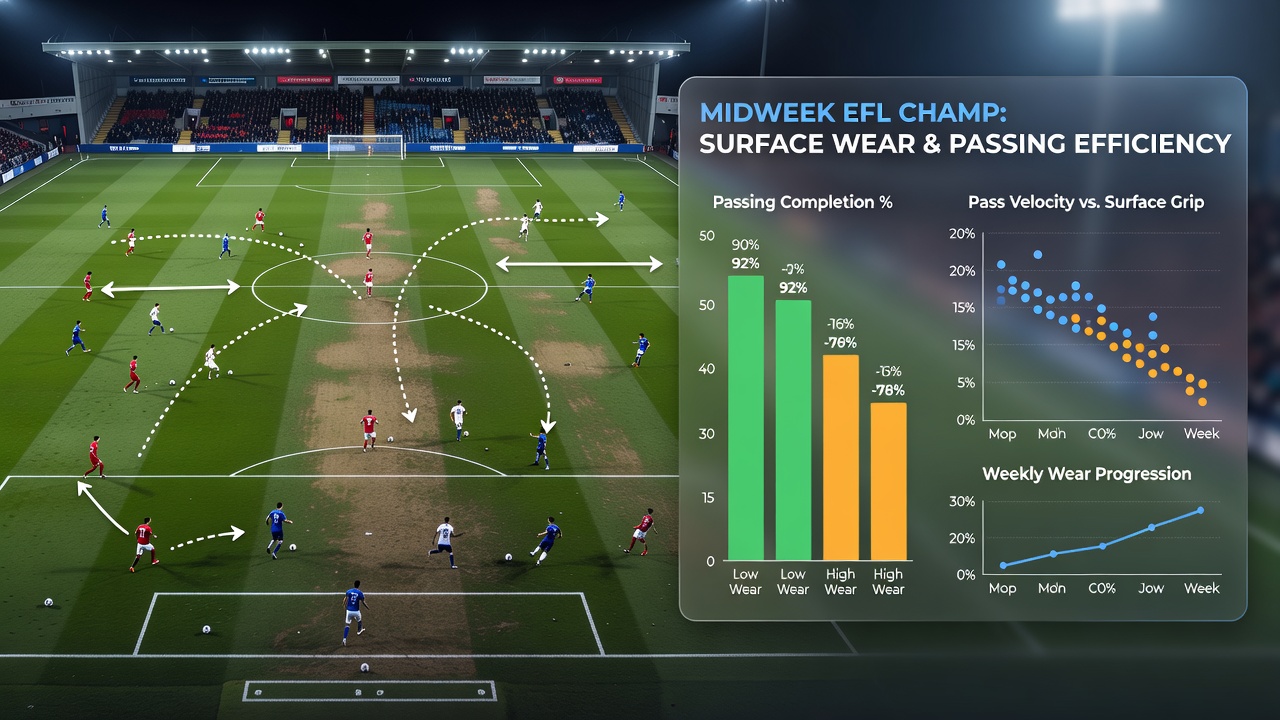
August 2026 marks the opening month of the new Championship campaign, when surfaces start in near-optimal condition yet still face immediate pressure from early-season midweek rounds. Several clubs have already noted that the first round of Wednesday fixtures produces noticeably different passing profiles than the preceding weekend games, even though the calendar has not yet reached the heavier congestion of autumn and winter.
Club-Specific Adaptations and Data Trends
Teams with access to detailed pitch-mapping software adjust training drills to simulate the expected wear zones before midweek travel. One Championship side that finished in the upper half of the table last season increased the proportion of raking passes over the top by 9 percent on midweek away fixtures, citing reduced reliability of shorter connections on tired central areas. Opponents who continued with their standard short-passing approach recorded completion rates 4.2 percentage points lower than their season average during those same matches.
Studies conducted by the UEFA technical department on surface consistency across European leagues support these observations, showing that hybrid pitches maintain better overall performance than natural grass yet still exhibit measurable changes after repeated use. Complementary research from the Sports Turf Association of Canada highlights how regional climate factors interact with fixture frequency to accelerate wear in northern hemisphere venues during the colder months.
Conclusion
Stadium surface wear patterns in the EFL Championship create measurable differences in passing efficiency during midweek fixtures, and clubs that monitor these changes gain clearer insight into expected performance variations. The interaction between fixture congestion, pitch recovery time, and ball behavior continues to shape tactical decisions across the division as the 2026-27 season progresses.