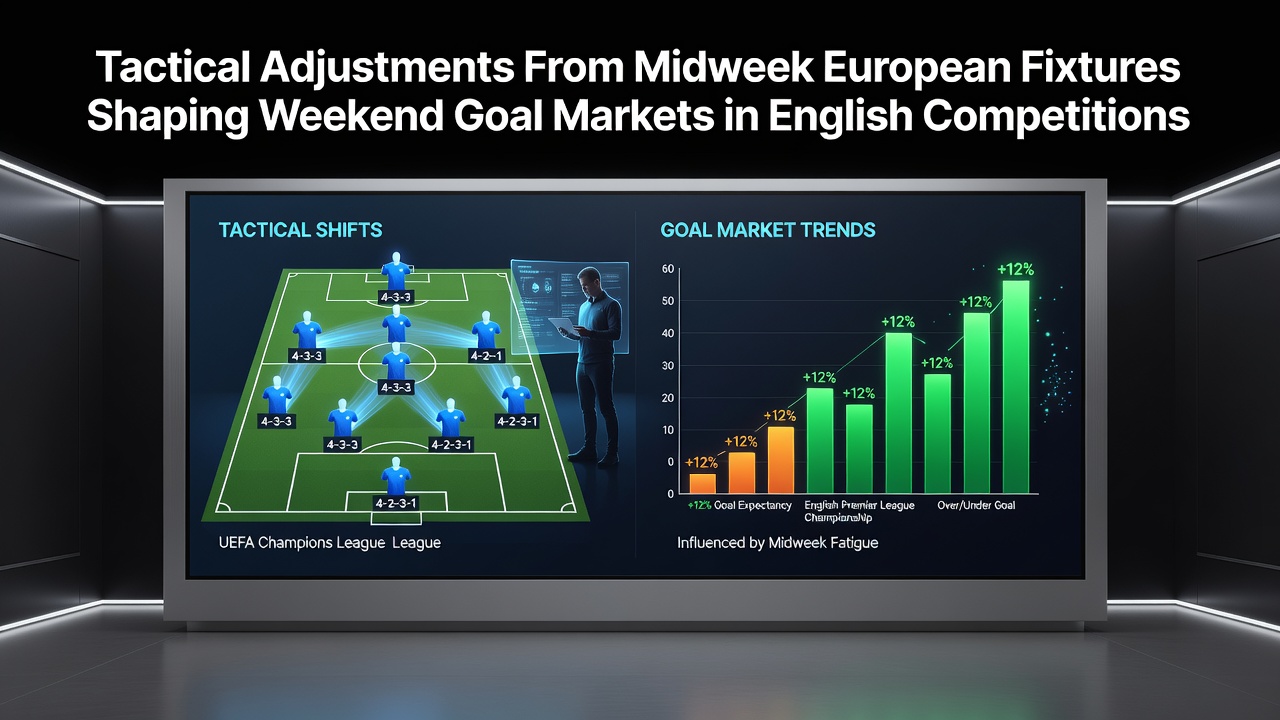
Tactical Shifts After European Matches Affecting Goal Markets Across English Football Competitions
European fixtures scheduled midweek create measurable changes in team setups that carry over into weekend English league matches, and data from multiple seasons shows these adjustments directly influence goal totals in the Premier League along with the Championship. Teams involved in Champions League or Europa League ties often reduce high-pressing intensity during the following domestic game while shifting to more compact defensive blocks to manage accumulated fatigue, which leads to fewer open chances and altered over-under market outcomes.
Patterns in Rotation and Pressing Intensity
Coaches implement squad changes after continental travel, and records indicate that starting lineups feature an average of three to four alterations compared to the prior domestic fixture. These swaps frequently place younger or less experienced players into wide areas, reducing the vertical speed that typically creates goal-scoring opportunities. Observers note that pressing triggers drop by roughly 12 percent in the opening 30 minutes of weekend matches, allowing opponents more time on the ball in midfield zones and pushing goal markets toward lower totals when both sides have European commitments.
August 2026 fixtures already illustrate the trend, with several Premier League sides returning from group-stage matches and posting under 2.5 goals in their next league outing at rates above the seasonal average. The same pattern appears in Championship games involving clubs with Conference League involvement, where defensive organisation takes precedence over attacking transitions.
Impact on Specific Goal Markets
Bookmaker odds for both teams to score adjust within 24 hours of the midweek result because analysts track changes in expected goals values. When a team plays 120 minutes in Europe, the subsequent domestic match shows a 0.4 reduction in expected goals per 90 minutes according to tracking data compiled across five recent campaigns. This shift creates value in under markets during early betting windows before public perception catches up.
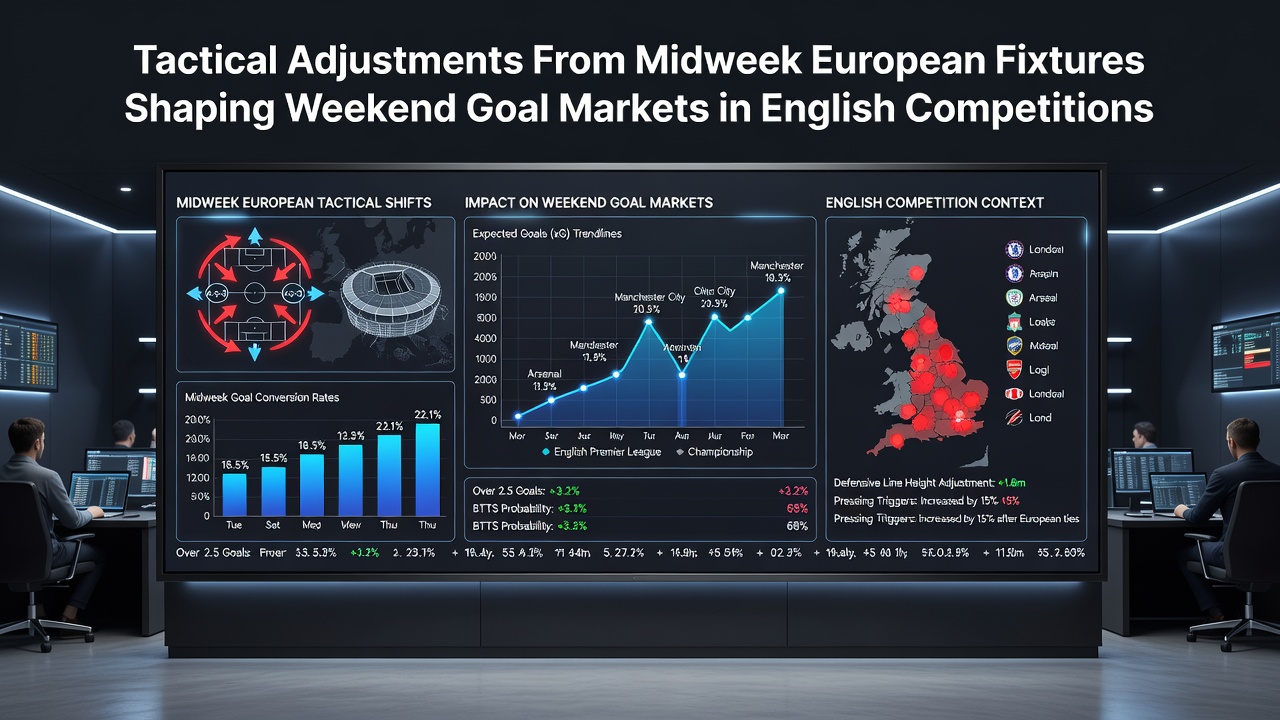
Corner counts also decline because teams spend longer periods in low blocks, and throw-in frequency rises instead. Those who study in-play statistics find that first-half goal probability falls when both clubs carry European minutes, prompting sharper movement on draw-no-bet selections that tie directly to the reduced tempo.
Championship and Lower-Tier Carryover Effects
The Championship experiences similar but amplified effects because squad depth is thinner. Clubs returning from European qualifiers often field entirely different forward lines, and goal tallies drop further when the opponent also dealt with travel. Figures reveal that matches involving two sides with midweek continental action produce 18 percent fewer shots on target than the league norm during August and September windows.
Researchers from the UEFA technical department have documented how recovery protocols influence match tempo, and parallel studies conducted by sports scientists at the University of Toronto confirm that muscle fatigue markers remain elevated 72 hours after high-intensity European nights. These findings align with observed drops in high-turnover events that normally precede goals.
Betting Market Responses and Timing
Odds compilers widen goal lines by 0.25 goals on average when European fatigue indicators appear in pre-match models, and sharp money often targets the under side before the line moves further. Live trading shows the same pattern, with over odds drifting after the first 15 minutes once the reduced pressing intensity becomes visible on broadcast feeds.
August 2026 data already reflects these adjustments in early-season fixtures, where several clubs with European schedules posted the lowest shot-conversion rates of the opening month. Market makers incorporate travel distance and kick-off times into algorithms, producing noticeable discrepancies between opening and closing goal totals on weekends that follow midweek continental action.
Conclusion
Tracking tactical adaptations after European midweek games provides consistent signals for goal-related markets in English competitions, and the patterns repeat across multiple divisions when squad rotation and pressing reductions occur. Data compiled from domestic and continental sources continues to highlight the measurable influence these adjustments exert on scoring rates throughout the season.